
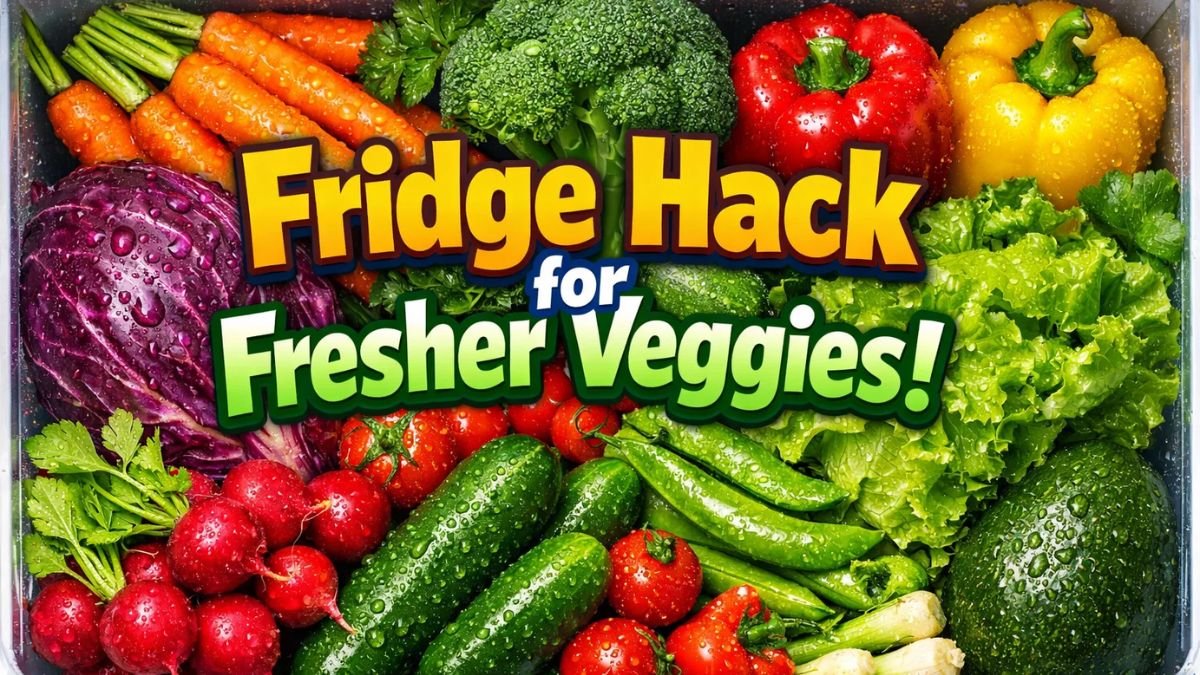
When it comes to keeping vegetables fresh, crisp, and full of flavor, most of us rely on the basic rule of simply storing them in the refrigerator. But anyone who cooks regularly knows the frustration of opening the fridge to find wilted spinach, soggy lettuce, rubbery carrots, or cucumbers that have lost their crunch far too soon. The common belief is that this is inevitable and that vegetables just don’t last long once you bring them home. But the truth is surprisingly different. Sometimes, all it takes is one small adjustment in your fridge to dramatically extend the life of your produce.
In recent years, food experts, nutritionists, and home cooks have been sharing a simple yet powerful trick that helps vegetables stay crisp for days longer than usual. It is not a new gadget, not an expensive storage container, and not a complicated routine. Instead, it is a tiny fridge habit that can make a very big difference. This article explores that adjustment in detail, explains why it works, and offers a deeper understanding of how your refrigerator environment affects your vegetables.
Understanding Why Vegetables Lose Their Crispness
Before revealing the adjustment itself, it is important to understand why vegetables wilt or become soggy in the first place. Vegetables are made up of a high percentage of water, which is held inside their cells. This internal moisture is what gives them their crunch. When they start losing it, they begin to soften, shrivel, and ultimately spoil.
Inside the refrigerator, vegetables are constantly exposed to changing humidity levels, airflow, and cold temperatures that can draw out their natural moisture. Many refrigerators also circulate very dry air to prevent frost buildup, which further pulls water away from the produce. The result is predictable: leafy greens collapse, carrots turn limp, and herbs dry out prematurely.
Another reason vegetables lose their crispness is because they continue to respire, meaning they release gases and moisture even after being stored. This process accelerates when the storage environment is not balanced. So, the goal is to create a protective layer that helps them retain internal moisture while reducing the impact of dry and cold air inside the fridge.
The Small Fridge Adjustment That Makes a Big Difference
The adjustment is incredibly simple: line your crisper drawer with a clean, dry kitchen towel — or even better, place a lightly damp towel around your vegetables.
This small step works because it naturally balances moisture levels inside the drawer. Instead of letting the vegetables sit directly in cold, dry air, the fabric acts as a controlled humidity buffer. It absorbs excess moisture when needed and releases it slowly, keeping the environment inside the drawer more stable.
A dry towel absorbs unwanted condensation that makes vegetables soggy, while a slightly damp towel prevents them from losing moisture and drying out. For leafy greens especially, this small adjustment can dramatically prolong crispness.
It may sound almost too simple, but people who use this method often report that vegetables like lettuce, spinach, and herbs stay fresh for nearly twice as long. Carrots and cucumbers stay crunchier, and delicate produce like cilantro or mint stays vibrant instead of turning black at the edges.
Why This Method Works So Well
Refrigerators are not designed with vegetables’ natural moisture needs in mind. In fact, modern frost-free fridges eliminate humidity from the air, making them harsher environments for fresh produce. By lining the drawer with a towel, you are essentially creating a micro-humid environment inside a dry machine.
The towel slows down airflow around vegetables, helping them maintain their water content. This protects their cells from collapsing, which is what causes wilting. It also reduces the shock of cold air, especially when the fridge door opens frequently.
This method also helps with ethylene gas. Some vegetables, especially apples, tomatoes, and bananas, emit ethylene, which speeds up ripening and spoilage in leafy greens. The towel doesn’t eliminate ethylene, but it creates a physical barrier that reduces direct exposure, slowing down the deterioration process.
Over time, the towel also prevents moisture pooling at the bottom of the drawer, which can lead to mold or sliminess. Instead of allowing water to collect, the towel absorbs and redistributes it evenly, creating a healthier storage space for your vegetables.
How to Do It Correctly
To make the most of this small adjustment, follow a very simple routine. You can either use a completely dry towel if your fridge tends to create too much condensation, or a lightly damp one for delicate greens. The towel should be washed and replaced every few days to prevent bacterial growth. Make sure it fits comfortably in the drawer without blocking airflow.
You don’t need a specialized cloth; a regular cotton kitchen towel works perfectly. Some people prefer microfiber towels because they absorb more moisture, while others use reusable cloth napkins or muslin cloths. The goal is simply to buffer moisture, so any clean fabric works well.
You can wrap individual vegetables or simply line the bottom of the drawer. For items like spinach, lettuce, and fresh herbs, loosely wrapping them in a slightly damp towel works beautifully. For root vegetables like carrots, radishes, or beets, a dry towel is usually enough to keep them crisp.
The best part is that this adjustment requires no ongoing effort beyond replacing the towel once it becomes too damp or dirty. It turns your crisper drawer into a true freshness-preserving space, instead of just another cold compartment.
Additional Small Habits That Enhance Freshness
While the towel trick is highly effective, pairing it with a few smart habits can enhance results even more.
One such habit is avoiding washing vegetables before storing them. Pre-washed vegetables tend to spoil faster because the excess moisture clings to them. Instead, wash them just before use so they remain crisp and firm for longer.
Another habit is keeping ethylene-producing fruits away from vegetables. Storing apples or tomatoes in the same drawer as leafy greens leads to faster spoilage. The towel helps buffer some of that gas, but it is best to separate them when possible.
Using ventilation settings on your crisper drawer can also make a difference. Many refrigerators come with a humidity switch, usually labeled “low” for fruits and “high” for vegetables. Keeping the drawer on high humidity helps keep vegetables fresher.
These adjustments don’t require much time or effort, but they complement the towel method nicely and help maintain crispness.
The Visible Difference You Will Notice
Once you begin using this simple fridge adjustment, the results become obvious within days. Lettuce that would normally wilt in two to three days now remains crisp for a week or more. Carrots stay snappy, celery remains firm, and herbs stay bright instead of turning limp.
Most people are surprised at how much less produce they throw away. Because vegetables last longer, there is significantly less food waste, fewer emergency grocery trips, and more time to enjoy your fresh ingredients without rushing to use them before they spoil.
This small fridge habit can also save money over time. When your vegetables stay fresher longer, you don’t have to replace them as frequently. It is a budget-friendly, eco-friendly practice that brings more value to every purchase.
Why It Matters in Everyday Life
In a world where food waste is a huge environmental and economic concern, learning how to extend the life of fresh produce is more important than ever. A large portion of household food waste comes from fruits and vegetables that spoil before they are eaten. This simple adjustment helps reduce that waste in a practical, effective way.
For people who enjoy cooking, having crisp vegetables readily available makes meal preparation more enjoyable and convenient. You are more likely to reach for vegetables when they look fresh and appetizing, and this can lead to healthier eating habits overall.
Families with busy schedules also benefit greatly. Kids are more likely to eat vegetables when they are crunchy and appealing, and adults can prepare quick salads or sautéed dishes without worrying about spoilage.
This small shift in how you use your fridge can have a surprisingly large impact on your daily routine, your budget, and even your overall health.
Conclusion
Keeping vegetables crisp and fresh doesn’t have to be a constant struggle. While refrigerators can be harsh environments for produce, one simple adjustment — placing a dry or slightly damp towel in your crisper drawer — can dramatically change the way your vegetables age. This tiny step balances moisture, protects delicate leaves, prevents sogginess, and helps vegetables retain their natural crunch longer than ever.
It is a small change, easy to adopt, and requires no special equipment. Yet its benefits are powerful and visible. Your vegetables stay fresh, your food waste decreases, and your cooking becomes more enjoyable. In a world where we are all searching for convenient solutions to everyday problems, this humble fridge adjustment stands out as a remarkably effective trick. It is a reminder that sometimes, the simplest solutions are the ones that make the biggest difference.
FAQs
Q1: What is the small fridge adjustment that keeps vegetables crisp?
A1: Adjusting the humidity settings or using the crisper drawer correctly helps vegetables stay crisp longer.
Q2: Which fridge setting should I use for vegetables?
A2: Use the high-humidity setting for leafy greens and most vegetables.
Q3: Why does humidity matter for vegetables?
A3: Proper humidity prevents moisture loss, keeping veggies firm and fresh.
