
In the world of American coins, if there’s one coin that has fueled the dreams of ordinary people becoming millionaires, it’s the Lincoln Wheat Penny. This coin was first issued in 1909, when the United States celebrated the 100th anniversary of President Abraham Lincoln’s birth. One side of the coin features Lincoln’s profile, and the other side depicts two stalks of wheat, hence the name “Wheat Penny.” This coin was minted from 1909 to 1958, after which it was replaced by the Lincoln Memorial penny. Over time, this coin has become more than just everyday currency; it has become a symbol of history, rarity, and potential wealth.
Even today, people not only in the US but around the world are searching through old coin boxes, piggy banks, and inherited collections, because some specific Lincoln Wheat Pennies are worth not thousands but hundreds of thousands of dollars. The most talked-about penny recently is estimated to be worth up to $567,000, which has reignited public interest.
The Story of the $567,000 Lincoln Wheat Penny
It might surprise anyone to learn that a single one-cent coin could be worth more than half a million dollars, but in the world of numismatics, this is entirely possible. The $567,000 price tag doesn’t belong to an ordinary Wheat Penny but to an extremely rare variant, either produced in limited quantities or made unique due to a minting error.
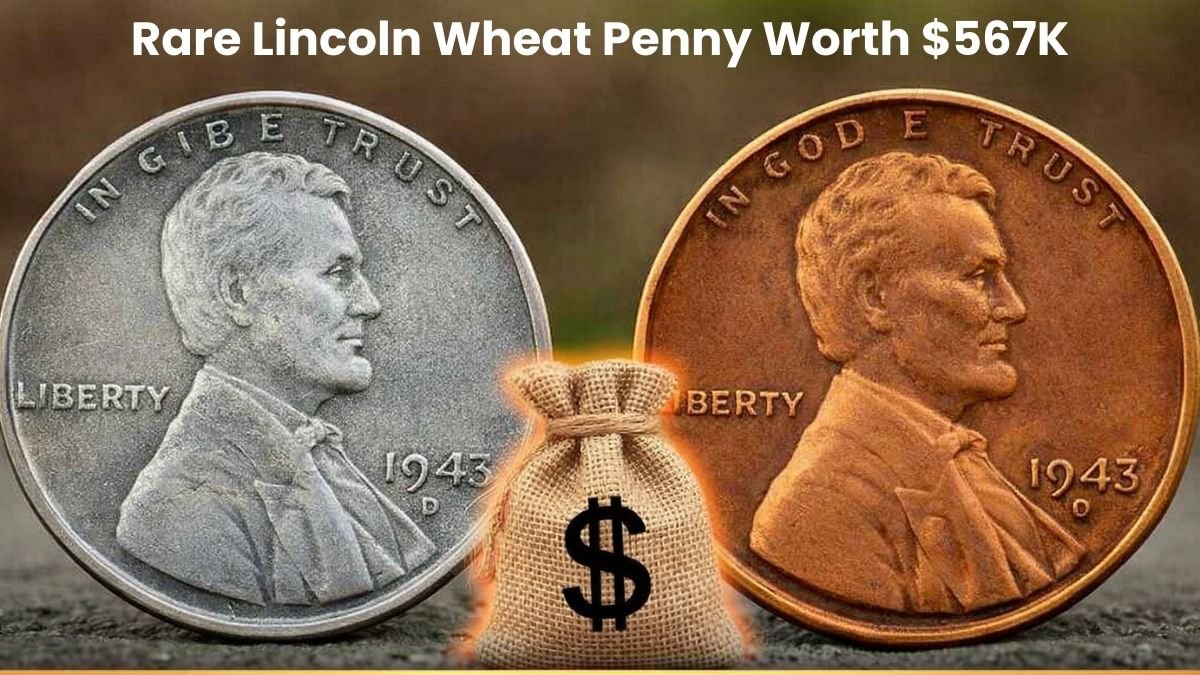
Among the most sought-after and expensive Wheat Pennies is the 1943 Bronze Lincoln Wheat Penny. In 1943, during World War II, due to a copper shortage, pennies were supposed to be made of steel, but some were mistakenly struck on old bronze (copper) blanks. These coins were produced in very small numbers, and today, this error makes them incredibly valuable. In auctions, 1943 Bronze Wheat Pennies in good condition have often fetched prices ranging from $500,000 to $1 million, and the $567,000 value falls within this range.
How to Identify a Lincoln Wheat Penny
If you have old coins, the first question will be how to determine if your coin is ordinary or a treasure worth millions of dollars. To identify it, it’s crucial to pay attention to a few key details.
First, check the year of the coin. Years like 1909, 1914, 1922, 1931, and especially 1943 are considered very important. Next, look for the mint mark, which is a small letter located below or near the year on the coin, such as “D” (Denver) or “S” (San Francisco). In some years, coins from specific mints were produced in very limited quantities, significantly increasing their value.
The metal of the coin is also extremely important. For example, a 1943 penny made of copper or bronze instead of steel can be exceptionally valuable. This can be determined with a simple magnet test—a steel penny will stick to a magnet, while a copper one will not.
The Importance of Mint Errors and Rare Varieties
Mint errors and rare varieties play a significant role in determining the value of a Lincoln Wheat Penny. Sometimes, errors occur in the die during the minting process, resulting in doubled letters (double die), faint or missing dates, or improperly struck designs. Such errors usually don’t make the coin worthless but rather make it even more valuable.
For example, the 1955 Double Die Lincoln Wheat Penny is one of the world’s most famous error coins. The letters of “LIBERTY” and the date are clearly doubled. This coin remains highly popular among collectors today, and its value can reach millions of rupees in good condition.
Why Coin Condition Matters
It’s not just the year or a minting error that matters; the coin’s condition also significantly impacts its value. Coins are typically graded into categories such as Good, Fine, Extremely Fine, About Uncirculated, and Mint State. The less wear and tear a coin has and the cleaner it is, the higher its value.
If that same rare Wheat Penny is in pristine condition, its value can be many times greater than a worn, ordinary coin. This is why collectors wear gloves when handling coins and store them in protective cases to preserve their condition.
How to Determine the Value of Your Lincoln Wheat Penny
If you think you might have a rare Lincoln Wheat Penny, don’t rush to sell it before determining its true value. It’s wise to have the coin examined by a reputable coin grading service or an experienced numismatist. In the US, organizations like PCGS and NGC provide professional grading services, which can significantly increase both the authenticity and value of your coin.
You can also get an idea of its value by looking at recent auction results for coins of the same year and condition. Keep in mind that not every price you see online is accurate, so it’s important to consult reliable sources.
Can a Million-Dollar Penny Still Be Found in a Pocket or Piggy Bank Today?
This is a question many people wonder about: can ordinary people still find such a rare penny today? The answer is yes, but with a very low probability. Most of the valuable Wheat Pennies have already found their way into collectors’ hands, but surprising discoveries still occasionally emerge from old inheritances, bank rolls, or jars of old coins.
Many people unknowingly hold onto pennies for years, considering them ordinary. Therefore, if you also have old American coins, examining them carefully could be like discovering a hidden treasure.
Conclusion: A Small Penny, but Priceless Value
The story of the Lincoln Wheat Penny proves that sometimes even the smallest and most ordinary-looking things can possess extraordinary value. The rare Wheat Penny, valued at $567,000, is not just a coin but a unique blend of history, error, and luck. If you have old coins, don’t overlook them—because a small coin in your pocket or drawer might just have the power to change your life.
FAQs
Q1. What makes a Lincoln Wheat Penny extremely valuable?
A Lincoln Wheat Penny becomes highly valuable due to rare minting errors, limited production years, unusual metal composition, and excellent condition, which attract serious coin collectors.
Q2. Can an ordinary-looking penny really be worth $567,000?
Yes, certain rare Wheat Pennies—especially error coins like the 1943 bronze penny—can be worth hundreds of thousands of dollars despite looking ordinary at first glance.
Q3. How can I check if my Lincoln Wheat Penny is rare?
You should check the year, mint mark, metal type, and condition, and consider professional coin grading to accurately determine rarity and value.
