
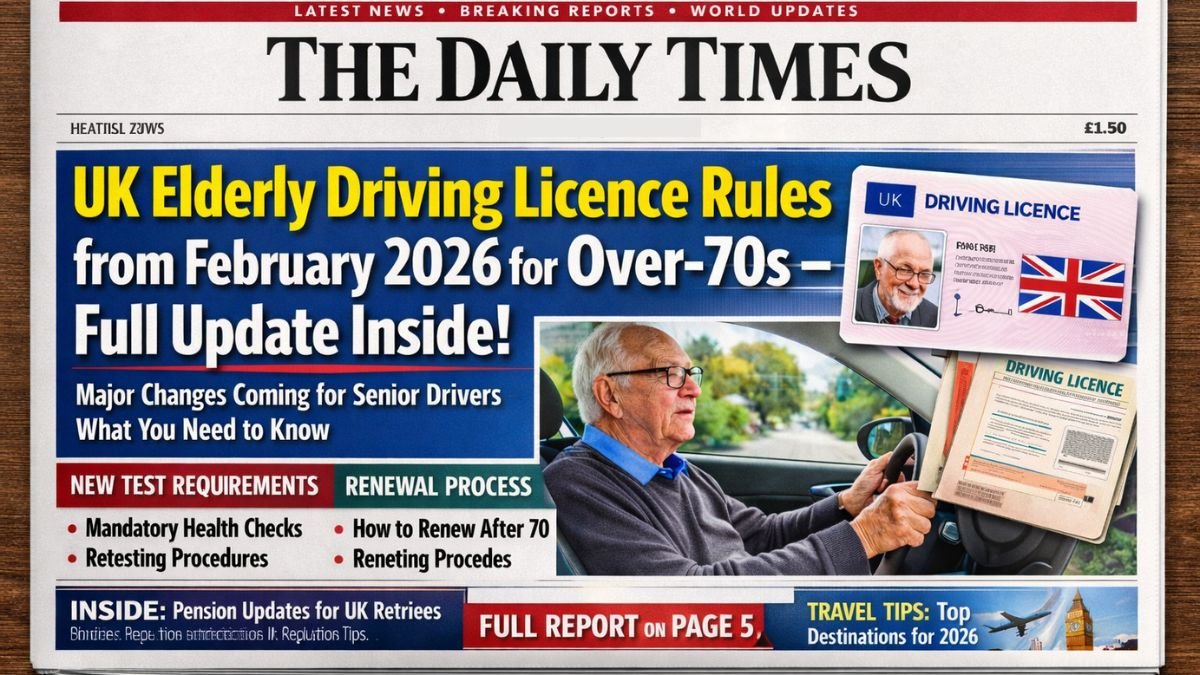
UK Elderly Driving Licence Rules from February 2026 for Over‑70s – In the UK, for senior citizens aged 70 and over, a driving license is not just a government document; it symbolizes their freedom, independence, and social connection. Driving themselves to doctor’s appointments, meeting friends, and running errands – all these things keep older adults mentally strong and confident. However, from February 2026, the government will be implementing some new rules for senior drivers, aimed not at taking away their independence but at further strengthening road safety.
These new rules are designed to ensure that older drivers remain safe, reduce the likelihood of accidents, and allow them to continue living independent lives.
What are the new driving license rules, and why are they being implemented?
These changes being introduced by the government are specifically for drivers aged 70 and over. Until now, driving licenses for this age group had to be renewed every 5 years, but from February 2026, this period will be reduced to 3 years. This means that senior citizens will now have to renew their licenses more frequently.
Along with this, a Medical Declaration will be mandatory every time the license is renewed, stating whether the driver is physically and mentally fit to drive. If a driver has an eye condition, or has previously informed the DVLA about it, an eye test may also be required.
The government has made it clear that the purpose of these rules is not to inconvenience older people, but to ensure the safety of everyone on the road. Similar rules are already in place in several European countries and have shown positive results. A complete summary of the changes at a glance
Effective date: February 2026
- Applicable to: All drivers aged 70 and over
- License renewal period: Every 3 years
- Medical declaration: Mandatory at every renewal
- Eye test: Required if necessary or if there are vision problems
- How to renew: Via the DVLA website or by post
- Penalties for non-compliance: Fines up to £1,000, license suspension, or invalid insurance
Why are these new rules considered necessary for older drivers?
As people age, several changes occur in the body and mind. Reaction times may slow down, eyesight may deteriorate, and certain medical conditions can affect driving ability. Road safety experts believe that regular medical checks and health declarations can significantly reduce accidents.
Furthermore, family members and doctors have repeatedly expressed concerns that some older drivers ignore their health problems or fail to inform the DVLA. The new rules are a concrete step towards addressing these concerns.
Who will these rules directly apply to?
These new rules will specifically apply to:
- Those who turn 70 on or after February 2026
- Those who are already over 70 and whose license is due for renewal after February 2026
- Drivers with any medical condition that affects their driving (regardless of age)
What will the driving license renewal process be like?
Renewing your license will remain as easy as before, with just a few additional steps. Online renewal can be done through the official DVLA website, requiring driving license details, National Insurance number, and passport information.
Those who are not comfortable with the online process can also apply by post. A medical declaration will be required with every application. An eye test may also be required if the DVLA deems it necessary or if the driver reports a vision problem.
If a person fails to renew their license on time and drives with an expired license, it will be considered illegal and they may face serious consequences.
How will these rules affect the lives of senior citizens?
Initially, these changes might seem a little challenging for some elderly people, especially those who are already apprehensive about government procedures. However, for those who regularly visit their doctor for checkups and have their eyes tested, the process will not be overly complicated.
In fact, for many senior citizens, this change may prove to be a relief, as it will give them the assurance that they are driving safely on the road. Those with conditions such as diabetes, a history of stroke, or memory problems will need to consult their doctor.
Failure to inform the DVLA of a Notifiable Medical Condition can result in a fine of up to £1,000 and may invalidate insurance.
What are the major benefits of the new rules?
These changes are expected to have several positive impacts. The biggest benefit is improved road safety. Regular medical checkups will reduce the risk of accidents. Additionally, health problems that are often overlooked by the elderly can be identified in a timely manner.
Family members will also have peace of mind knowing that their parents or elderly relatives are driving safely. Timely license renewal will also prevent fines and insurance-related problems. Most importantly, it will help maintain the confidence and independence of senior citizens.
How to prepare in advance for license renewal? How to prepare?
Keep your address and contact information updated with the DVLA. Have regular check-ups with your doctor and eye specialist. Start the renewal process well before your license expires.
Keep your medical reports and eye test documents safe and do not ignore any notices from the DVLA.
Conclusion
The new driving license rules, effective February 2026, are not intended to take away the freedom of older drivers, but rather to ensure their safety. The three-year renewal cycle, medical declarations, and eye tests when necessary—all these steps are taken with road safety and the well-being of senior citizens in mind.
Ultimately, the message is clear—if you are fit to drive, there are no restrictions. All that is required is responsibility, caution, and timely adherence to the rules.
FAQs
Q. When will the new driving licence rules start for seniors?
A. The new rules will come into effect from February 2026.
Q. Who must follow these new rules?
A. All drivers aged 70 years and above, or those turning 70 on or after February 2026.
Q. How often will seniors need to renew their driving licence?
A. Senior drivers will need to renew their licence every 3 years instead of every 5 years.
