
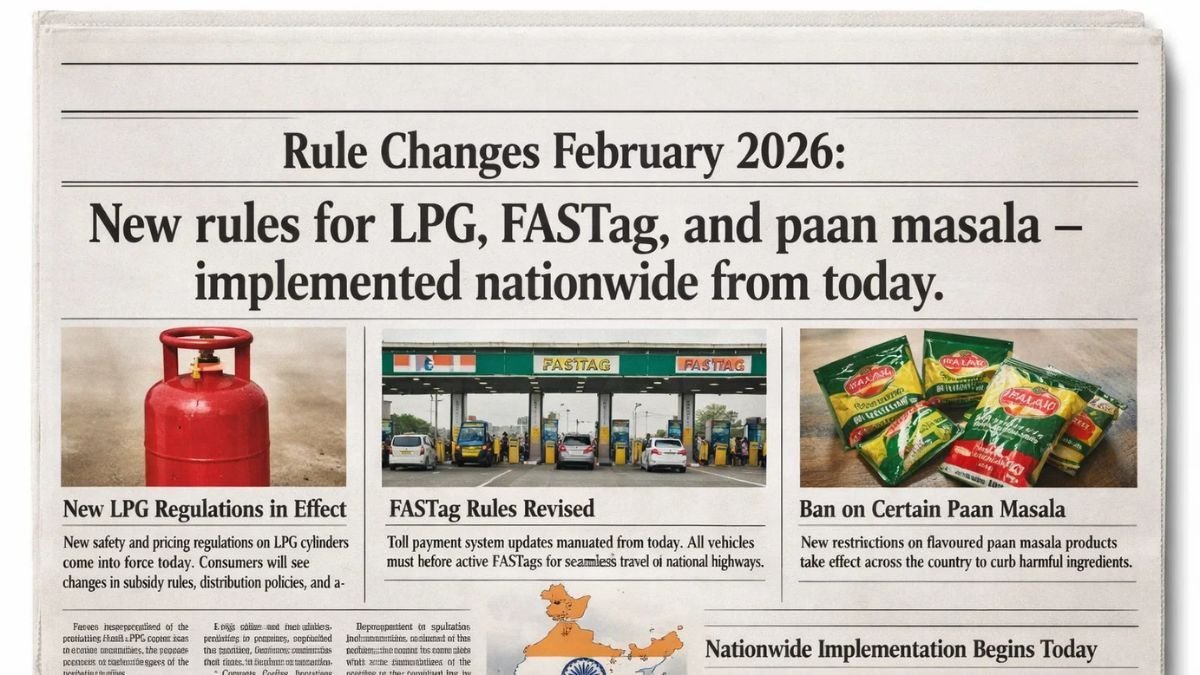
Rule Changes February 2026: The first day of February 2026 has arrived with a significant wave of regulatory changes across India. These changes, implemented simultaneously across the country, directly impact millions of households, commuters, drivers, and small businesses. From updated LPG cylinder norms to the new FASTag transaction system and stricter paan masala regulations, the February 2026 rulebook marks a clear shift toward improved accountability, digital efficiency, safety, and public welfare. As these rules officially come into effect today, understanding their implications becomes essential for every citizen.
In this detailed article, we break down each major change unfolding from this month, explore why these regulations were introduced, and analyze how they will affect daily life. Whether you rely on cooking gas at home, regularly use national highways with FASTag, or run a business associated with tobacco-related products, these new rules are designed to reshape your routine in more ways than one.
A New LPG Framework Comes Into Force Beginning February 2026
The LPG system in India has undergone one of its most impactful transformations in recent years. With over 32 crore LPG consumers nationwide, even the slightest regulatory change can create ripples across the country. The February 2026 LPG rules push for transparency, household safety, and uniform pricing, ensuring that customers receive only standard-quality LPG cylinders without discrepancies.
One of the most noticeable changes is the revised procedure for cylinder delivery. From today onward, delivery staff are required to carry digital measuring devices to ensure accurate weight verification at the customer’s doorstep. This move aims to eliminate long-standing concerns about underweight cylinders. Customers will now have the right to request an on-the-spot check before accepting the cylinder. If a cylinder is found to be below the standard weight margin, it must be replaced immediately without any extra charge.
Another major update is the digitization of every LPG refill. The new rules mandate that each refill order must be linked with the customer’s verified mobile number and digital payment ID. The government hopes to reduce fraudulent bookings and the unauthorized sale of domestic cylinders in the commercial market. The transition to digital records will also give consumers more control, as they can access the complete history of their refill cycles, payments, and delivery times.
Along with these customer-facing improvements, the new rules include backend reforms. Cylinder distribution agencies must now upload inventory and dispatch details in real-time. This means stock shortages, delivery delays, and supply chain irregularities can be monitored instantly. With greater transparency, both customers and agencies are expected to benefit from smoother, faster, and more predictable service.
Safety forms another crucial part of these new rules. LPG distributors have been instructed to strictly comply with updated safety checks, ensuring that all cylinders undergo pressure tests and valve inspections before dispatch. Customers are also expected to receive printed or digital safety instructions along with the cylinder. The government aims to reduce household accidents that occur due to faulty cylinders or improper leakage checks. These measures are not mere procedural changes but steps toward ensuring safer kitchens, reduced wastage, and higher accountability.
FASTag Rules Undergo Major Transformation to Curb Toll Plaza Delays
For years, FASTag has been the backbone of electronic toll collection across India’s highways. Yet, despite its widespread use, issues such as pending dues, mismatched accounts, and technical glitches have remained common. The new FASTag rules introduced from February 2026 focus on resolving these longstanding issues and ensuring smoother, faster toll movement.
Starting today, every vehicle owner must migrate to the unified FASTag system, discontinuing all older versions of FASTag issued before June 2023. This unified system allows automatic syncing with all national and state toll plazas. Without the updated FASTag, vehicles may face double toll charges or even penalties. The rule ensures better compatibility across toll booths and reduces incidents of “FASTag not detected” errors.
Another significant update is the introduction of the mandatory balance threshold system. Under the new rule, a FASTag must maintain a minimum balance before entering the toll plaza. If the balance dips below the threshold, the system will not permit green-lane access. Instead, the vehicle may be rerouted toward a cash lane or charged an additional fee. This ensures that toll plazas no longer experience hold-ups due to insufficient balance notifications or disputes.
The new rules also require that all FASTag wallets be linked directly with verified identity documents such as Aadhaar or PAN. This verification eliminates duplicate FASTags issued for the same vehicle and prevents misuse or fraudulent entry. Additionally, toll plaza cameras have been upgraded to automatically scan vehicle registration numbers and cross-check them with FASTag data.
Drivers will now receive updated push notifications for every toll deduction, including the plaza name, deduction amount, lane number, and timestamp. This level of detail offers improved transparency and reassures drivers about transaction accuracy. Moreover, expired FASTags must be returned or digitally deactivated to prevent unauthorized use under old records.
Fleet operators, too, will see a transformation under the new rules. They can monitor vehicle-wise toll expenses in real-time through dedicated dashboards. This system aims to reduce disputes in logistics billing, improve route planning, and prevent misuse by drivers. The government expects that the new FASTag reforms will collectively reduce waiting time at toll plazas by up to 40 percent, boosting highway mobility.
These enhanced rules represent a modern digital infrastructure where financial efficiency and road discipline go hand in hand. For the millions who travel daily, these improvements promise a noticeably smoother experience on national highways.
New Nationwide Restrictions on Paan Masala and Related Products
Perhaps the most controversial and widely discussed rule change coming into effect today involves the regulation of paan masala and allied products. With rising concerns over public health, addiction among youth, and the environmental damage caused by sachet-based products, the latest rules bring strict oversight to the market.
From February 2026, all paan masala packaging must carry standardized health warnings covering at least 85 percent of the packet surface. The warnings include graphic images and bold messaging regarding the harmful effects of tobacco and chemical-based flavoring agents. Manufacturers who fail to comply will face severe penalties, including suspension of licenses.
Another major restriction is the ban on loose or unpackaged paan masala and similar chewable products. Retailers must now sell only sealed packets with proper labeling, traceability codes, and registered manufacturer details. This aims to eliminate counterfeit products commonly sold in local markets, which have been found to contain hazardous unregulated substances.
The new rules also prohibit the sale of paan masala products near schools, hospitals, and government buildings. The restriction zone has been expanded from the previous 100 meters to 200 meters. This step is intended to limit exposure to minors and maintain a healthier environment around public areas.
Environmental concerns have also been addressed. Sachets made from non-biodegradable plastics have been barred, pushing manufacturers to adopt eco-friendly packaging alternatives. Retailers, too, must display dedicated bins for paan masala waste disposal. Violations may result in monetary penalties or the suspension of their trade license.
These rules collectively form part of a broader public welfare initiative. With India striving to reduce oral cancer cases and minimize plastic waste, stricter paan masala regulations are expected to deliver long-term benefits that go beyond immediate market changes.
How These Rule Changes Will Affect Daily Life Across India
The February 2026 reforms may seem technical at first glance, but their real impact unfolds in everyday scenarios. LPG users will likely experience more efficient cylinder delivery, improved safety standards, and fewer disputes about weight and leakage. Housewives, tenants, and individuals living in rural areas may particularly benefit from the enhanced transparency.
For commuters, especially those who travel long distances for work or business, the FASTag updates will prove to be a major relief. Faster toll movement is only one part of the benefit. The unified system reduces technical failures, the updated notifications offer clarity, and the identity-linked wallet improves financial security.
Small retailers, paan shops, and distributors will face the most immediate adjustment under the paan masala rules. Compliance may require investment in new packaging, updated vendor licenses, and waste disposal infrastructure. At the same time, these rules could encourage a gradual shift toward healthier alternatives and reduce littering caused by discarded sachets.
When viewed collectively, these regulatory updates reflect a government push toward modernization, digital accountability, and societal well-being. The changes are not merely administrative. They signal a future where service quality, consumer safety, and environmental responsibility take center stage.
Conclusion
The nationwide implementation of the new LPG, FASTag, and paan masala rules from February 2026 marks a transformative chapter for India. Designed to promote transparency, safety, efficiency, and public health, these rules will influence daily life in profound ways. LPG consumers will enjoy safer and more transparent delivery services. Highway travelers will benefit from smoother toll experiences. Society at large will move toward better health and cleaner surroundings under the revised paan masala regulations.
While businesses and individuals may face an initial adjustment period, the long-term advantages of these changes are undeniable. As India embraces upgraded systems and forward-looking policies, these February 2026 rules stand as a reminder that thoughtfully crafted regulations can help shape a more efficient, responsible, and healthier nation.
FAQs
Q. What rule changes are implemented from February 2026?
A. New rules related to LPG cylinders, FASTag, and paan masala have come into effect nationwide.
Q. What is the new rule for LPG consumers?
A. The updated LPG rules focus on distribution, verification, and subsidy-related compliance for consumers.
Q. Are there any changes in FASTag rules?
A. Yes, FASTag rules now emphasize strict KYC compliance, penalty enforcement, and smoother toll transactions.
